Rapeseed yield comes from cooking temperature and barrel load — not press model
Every rapeseed press shares the same 60 MPa hydraulic system and 2.2 kW motor. The hot-press yield gap between a well-cooked and a raw-fed barrel can be 6-8 percentage points — far more than any model upgrade delivers.
How the rapeseed hydraulic press cycle actually works: cooking at 95-105°C, 30-40 min per 100 kg barrel, hot-press yield 38-44%, cold-press yield 32-38%, and the double-low vs conventional distinction that drives model choice.
38–46% oil content, hot-press on 300/325 series
Rapeseed yields well under hot pressing. The 300/325 hot-press series (100 kg/barrel, 30–40 min/barrel) is the standard match. Pre-cooking at 100–110 °C activates oil release and reduces residual oil in cake to ≤7%.
Erucic acid: traditional ~50% vs canola <2%
Traditional rapeseed is hot-pressed for high-erucic flavor oil (Chinese cuisine, frying). Canola is bred for low erucic acid and is the global commodity cooking oil. The two products use the same press but require different sales channels.
Glucosinolates in cake control feed value
Rapeseed/canola cake contains 32–38% protein, attractive for animal feed. Glucosinolate content limits inclusion rate in monogastric (pig, poultry) diets. Canola cake is far more feed-friendly than traditional rapeseed cake.
Refining is standard, not optional
Crude rapeseed oil is dark green-brown with phospholipids, FFA, and pigments. Full degumming + alkali neutralization + bleaching + deodorization (RBD) is required for retail bottling, except in niche flavor-oil markets.
Rapeseed hot-press and cold-press parameters side by side
What the cooking step actually does to rapeseed yield
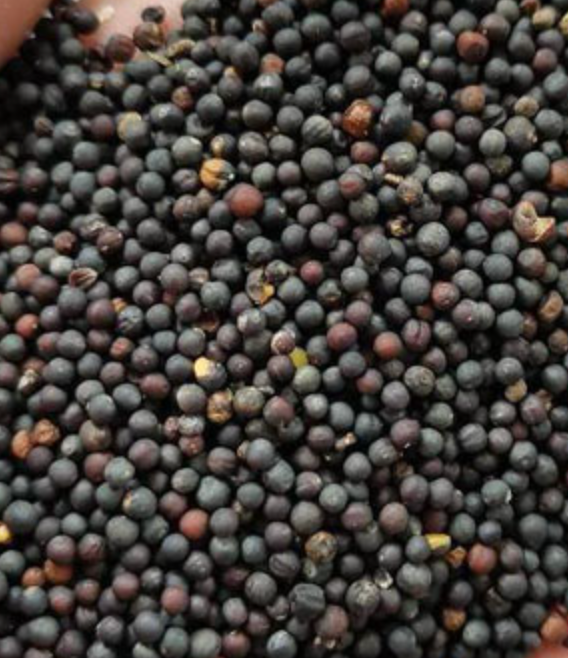
Rapeseed kernels are small (1.8–2.2 mm diameter) with a thin, waxy seed coat that resists oil release unless the cell walls are softened first. Cooking at 95–105°C for 15–20 minutes raises cell-wall permeability, reduces oil viscosity, and coagulates the protein matrix so it does not hold oil by adsorption during pressing. A barrel fed at the right moisture (7–9% entering the cooker) and pressed immediately after discharge yields 38–44% — at the high end of the range. Feed that skips cooking or cooks too short drops to 32–35%, which is barely better than cold press without the quality upside. The hydraulic press then works the same way regardless of model: a 2.2 kW pump builds to 60 MPa, the ram descends, and the mechanical relief valves bleed pressure at setpoint — the operator does not adjust pressure by model. What changes with model number is frame stiffness and how well the frame holds that pressure steady over years of repeated cycles. A 300 or 325 ton frame is the standard rapeseed hot-press choice because the hot cycle runs at lower effective pressing stress than cold; a 355 or 400 ton frame is worth the cost only when you plan cold-press runs, extended daily hours, or simultaneous multi-press operation. Cake emerges at 8–10% residual oil on hot press; cake protein reads 35–40%. Double-low (low glucosinolate, low erucic acid) varieties produce a glucosinolate-free cake that commands a wider feed-buyer market than conventional rapeseed or mustard cake, which requires restrictions on feeding rate to non-ruminants.
What to confirm before scoping Rapeseed Hydraulic Oil Press: Cooking, Hot-Press Cycle, and Yield Reality
Rapeseed Hydraulic Oil Press: Cooking, Hot-Press Cycle, and Yield Reality should not be quoted from an equipment name alone. Check feed lots, target oil, post-press handling, and packing rhythm in one scope before deciding which Rapeseed / Canola Oil Press modules stay. Listed on the factory hot-press page — discuss 300/325 first.
When feed condition, moisture, impurities, batch weight, and product position are unclear, press tonnage and filter area become guesswork. Factory systems share 60 MPa and 2.2 kW motors; hot pure press is 30–40 min/barrel and cold pure press is ~2 h/barrel — cycle time matters more than brochure tonnage.
- Confirm whether feed is whole seed, kernels, pretreated material, or an existing semi-finished stream.
- Confirm whether the target is crude oil, filtered oil, bottled oil, drum ingredient oil, or a refining handoff.
- Hot cycle reference: pure press 30-40 min/barrel, ~1.5 h for 2 barrels with loading; cold pure press ~2 h/barrel, ~4.5 h for 2 barrels.
- Confirm batch rhythm, labor, changeover, retained samples, power (often 380V/50Hz/3ph), and site install conditions.
Match hot / cold models to factory hard data
When discussing Rapeseed Hydraulic Oil Press: Cooking, Hot-Press Cycle, and Yield Reality, pin models to published factory specs — not tonnage alone.
Hot 300/325: 300–325 ton, 60 MPa system, standard barrel Ø390×800 mm / max 100 kg, pure press 30–40 min/barrel, ~1.5 h for 2 barrels with loading, 2.2 kW motor. Cold 355/400/426/480/500: 370–630 ton, integrated frame, same 100 kg standard barrel, pure press ~2 h/barrel, ~4.5 h for 2 barrels with loading; optional Ø300 high-pressure barrel max 60 kg. Residual oil target ~≤5% (peanut hot often 6–8% measured).
- Standard barrel Ø390×800 mm, max ~100 kg crushed feed; optional Ø300 high-pressure barrel max ~60 kg.
- Cylinder material 27SiMn; cold frames are integrated molded steel; hot frames are typically H-type channel steel.
- Listed on the factory hot-press page — discuss 300/325 first.
project scope needs to land in equipment interfaces
After Rapeseed Hydraulic Oil Press: Cooking, Hot-Press Cycle, and Yield Reality is clear, write the interfaces: how preparation feeds the press, how oil leaves the press, how filtration connects to tanks, and how packing receives finished oil.
Front-end input
Record feed form, daily volume, moisture, and sorting needs so pretreatment is not left to operators.
Clarification, refining, and meal
Traditional flavor oil may use light filtration; canola retail often needs full RBD. Cold dense powder needs 355–500 — not 300/325 alone.
Delivery data
Prepare space, power (often 380V/50Hz/3ph), labor, target package, local rules, and acceptance method before quotation.
Clear these up first
Hot pressing is the standard for commercial rapeseed oil in China and most export markets: cooking at 95-105°C, pressing at barrel temperature 70-85°C, yield 38-44%, cycle 30-40 min per barrel. Cold pressing (≤60°C, 355+ frame) is used for premium double-low specialty oil where the green-gold color and mild flavor justify the lower yield. The majority of rapeseed mills run hot press.
These next pages move the discussion forward
Buying guides
Hydraulic vs Screw Oil Press for rapeseed: Which Fits Your Mill?
Compare hydraulic batch press vs continuous screw (expeller) for rapeseed: oil quality, cold-press ability, capacity, residual oil, labor, and when each route wins. Use this before you request a quote.
Continue →Buying guides
rapeseed Hydraulic Press Capacity: Barrels per Shift and How Many Presses
Size rapeseed hydraulic capacity with real cycles: hot pure press 30-40 min/barrel (~1.5 h for 2 barrels with loading); cold ~2 h pure / ~4.5 h for 2 barrels. Example math for 1–5 t/day small mills.
Continue →Buying guides
rapeseed Oil Press Inquiry Checklist: Data That Gets a Real Quote
RFQ checklist for rapeseed hydraulic oil press projects: seed form, kg/shift, hot/cold, filtration, cake path, power, country, and photos. Incomplete inquiries get catalog replies — complete packs get model counts and line scope.
Continue →Send this page's requirement to the factory
Bring feed condition, target output, and site constraints, and we will continue from what this page covers.